The Church's Hidden Treasures: Understanding Relics in the Catholic Faith
Relics are among the oldest and most misunderstood traditions in Christianity. For nearly 2,000 years, the Catholic Church has preserved relics associated with Christ, the apostles, martyrs, and saints. Yet many Catholics know very little about them, and many non-Catholics wonder why the Church continues this practice today.
The history of relics can be traced back to the earliest days of Christianity. After the martyrdom of St. Polycarp in the second century, Christians carefully gathered his remains and preserved them as precious reminders of his witness to Christ. Similar accounts can be found throughout the early Church as Christians honored those who had given their lives for the faith.
The practice is rooted in Scripture. In the Old Testament, a dead man was restored to life after coming into contact with the bones of the prophet Elisha (2 Kings 13:20-21). In the New Testament, a woman was healed by touching the garment of Jesus (Mark 5:25-34), and handkerchiefs that had touched St. Paul were associated with healings and miracles (Acts 19:11-12). These passages reveal a biblical understanding that God can work through material things connected to holy persons.
The Catholic Church classifies relics into three categories. First-class relics are the physical remains of a saint, such as bones, hair, or blood. Second-class relics are items personally used by a saint, such as clothing or possessions. Third-class relics are objects that have been touched to a first-class relic.
The Catechism of the Catholic Church teaches that Christian devotion includes honoring the saints and their relics. In discussing popular piety, the Catechism states:
"Besides sacramental liturgy and sacramentals, catechesis should take into account the forms of piety and popular devotions among the faithful. The religious sense of the Christian people has always found expression in the various forms of piety surrounding the Church's sacramental life, such as the veneration of relics..." (CCC 1674)
The Church makes an important distinction between veneration and worship. Worship belongs to God alone. Relics are not worshipped, nor are they viewed as possessing magical powers. Rather, relics are honored because of their connection to holy men and women whose lives reflected the grace of God.
Relics remind us that Christianity is not merely a set of ideas. Our faith is rooted in real people, real events, and the reality of the Incarnation. Jesus Christ took on flesh, entered human history, and sanctified the material world. The saints followed Him with heroic faith, and relics serve as tangible reminders of their witness.
In a culture that often forgets its spiritual heritage, relics point us back to the reality of holiness. They remind us that sainthood is possible, not only for extraordinary people in history, but for ordinary men and women who respond faithfully to God's call.
To learn more about relics, their history, and their significance in the Catholic faith, watch Warriors for Life host Elizabeth Sutcliffe and Eric Tafoya as they sit down with Anthony Di Mauro, founder of The Relic Project.
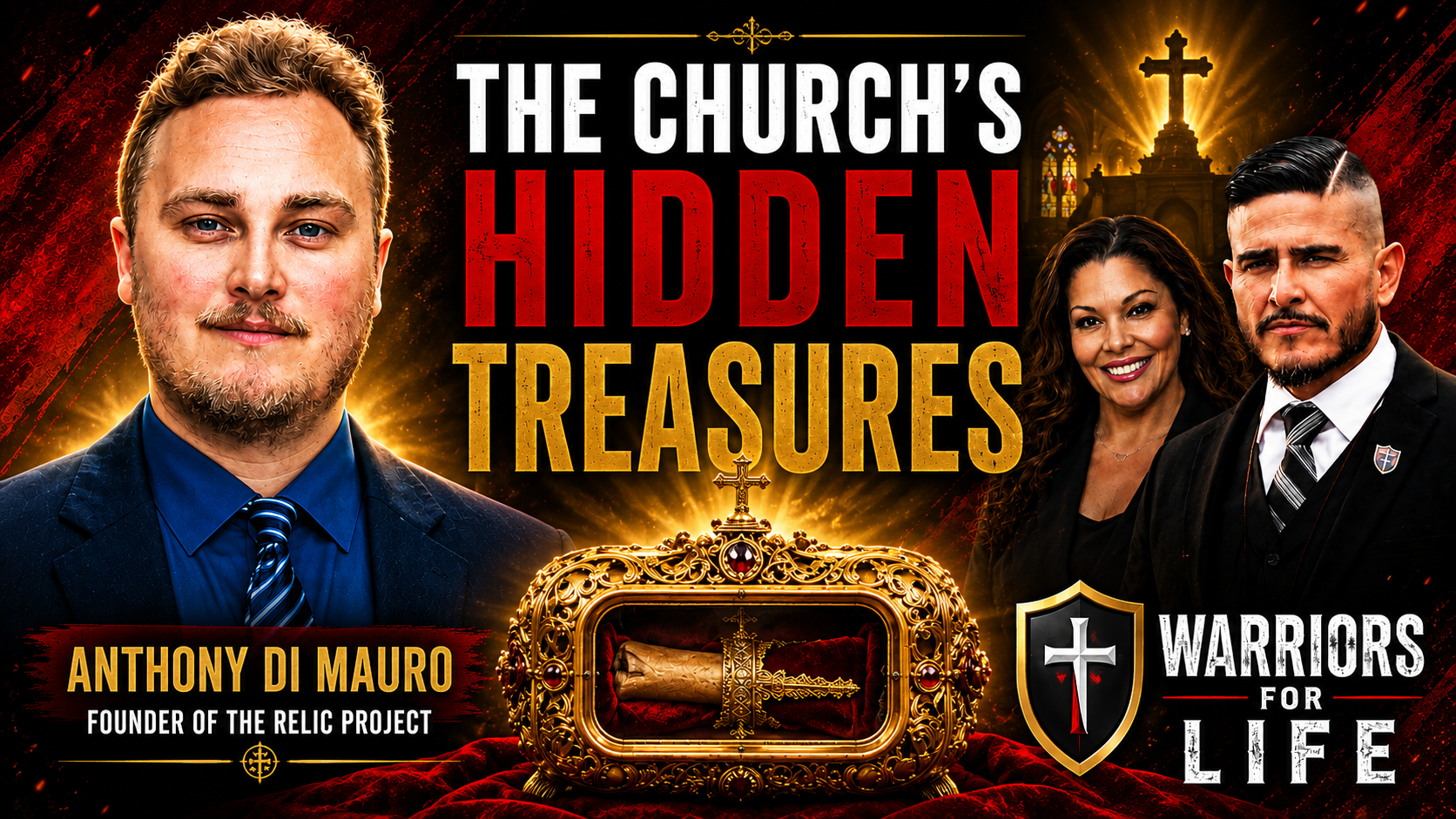
Watch the full episode here:
https://www.youtube.com/live/g7OpHWxMbg4?si=nBobF1VihCMgtOl6
Viva Cristo Rey.